Microbial Art War": Visualizing Antibiotic Resistance on Petri Dishes

Aug 7, 2025 By

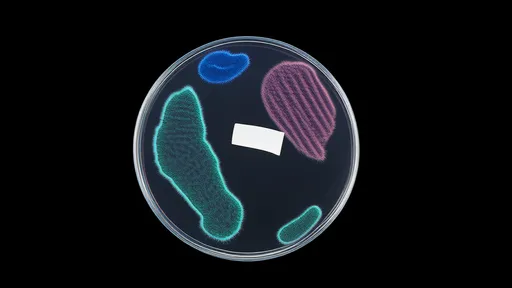
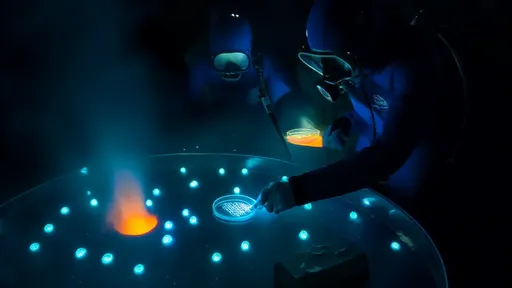
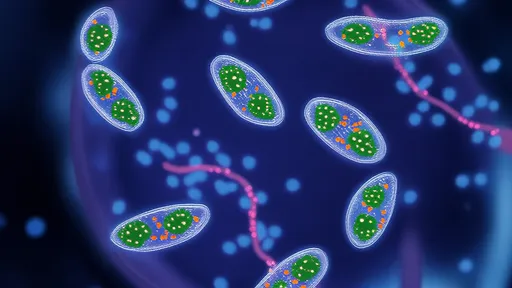
The petri dish has long been a canvas for science, but in recent years, it has also become an unlikely medium for art. Across laboratories worldwide, microbiologists and artists are collaborating to visualize the invisible threat of antibiotic resistance through stunning, often unsettling, microbial art. These creations—grown from bacteria, fungi, and other microorganisms—serve as both a scientific tool and a cultural statement, merging the rigor of microbiology with the emotional impact of visual storytelling.

At the heart of this movement is a paradox: the very beauty of these living artworks underscores their danger. Vibrant swirls of Staphylococcus aureus or delicate branching patterns of Escherichia coli are rendered in vivid hues by chromogenic agar, turning resistant strains into abstract landscapes. Yet their aesthetic appeal belies a grim reality. Each colorful colony represents pathogens that evade our most potent drugs, a crisis projected to claim 10 million lives annually by 2050 if unchecked. Artists like Anna Dumitriu and biohacker Nuria Conde have pioneered techniques to "paint" with antibiotic gradients, where zones of inhibition form halos around drug discs—a stark visual metaphor for medicine's shrinking arsenal.

The process itself is a meticulous dance between control and chaos. Unlike traditional art forms, microbial compositions evolve unpredictably as colonies compete for resources or mutate mid-growth. Some practitioners exploit this by using genetically engineered bacteria that fluoresce under UV light, creating ephemeral installations that change hourly. Others, like the Micropia museum in Amsterdam, embed agar plates with antibiotics to demonstrate resistance patterns through living infographics. The resulting pieces—sometimes preserved in resin, other times deliberately destroyed after exhibition—challenge viewers to confront microbial intelligence on its own terms.

Critics argue such projects risk glamorizing superbugs, but proponents counter that they democratize science. When Harvard’s "Germ Art" exhibition displayed MRSA cultures alongside historical plague maps, visitors reported heightened awareness of resistance spread. Similarly, citizen science initiatives invite the public to "culture their environment," swabbing subway poles or smartphones to grow personalized resistance maps. This participatory approach has caught the attention of policymakers; the WHO’s 2023 report on antimicrobial resistance featured microbial artwork to emphasize surveillance gaps.

Beyond galleries, the techniques have unexpected clinical value. Researchers at Imperial College London adapted artistic plating methods to track hospital outbreaks, using color-coded strains to visualize transmission routes. Meanwhile, synthetic biologists draw inspiration from these patterns to design new antimicrobial surfaces. The crossover has birthed an entire aesthetic lexicon—terms like "bacterial bloom" and "resistance topography" now appear in both lab notebooks and exhibition catalogs.

Perhaps the most poignant works are those that incorporate human elements. A recent installation by artist-scientist Joana Ricou used agar mixed with tears from different emotional states to show how stress hormones affect microbial growth. Another project embedded antibiotics in agar shaped like ancient healing symbols, highlighting the fraught relationship between medicine and evolution. These pieces don’t just depict resistance—they make it visceral.

As the field matures, ethical questions surface. Should artists work with Level 3 pathogens? Can aestheticizing crisis lead to complacency? There are no easy answers, but the dialogue itself proves the power of this fusion. By rendering an abstract threat tangible, microbial art compels us to see resistance not as distant science, but as a deeply human problem—one demanding creativity equal to its complexity.

The next frontier may lie in augmented reality. Pioneers like the BioArt Lab at Rensselaer Polytechnic Institute are overlaying digital resistance data onto physical cultures, allowing viewers to "see" gene transfer between bacteria in real time. Such innovations suggest that the marriage of art and science will only grow richer as the resistance crisis deepens. In the end, these petri dish masterpieces do more than inform—they implicate. Every brushstroke of bacteria is a mirror held to our collective choices, a reminder that in the war against superbugs, humanity is both the aggressor and the endangered.
Recommend Posts
Biology

Core Dark Energy: Subsurface Microbial Hydrogen Metabolism in Rock Fractures"

By /Aug 7, 2025

Deep beneath the Earth's surface, in the labyrinthine fractures of ancient rock formations, scientists are uncovering a hidden world of microbial life that challenges our understanding of energy production. These subterranean communities, thriving in complete darkness and extreme conditions, may hold the key to a revolutionary concept: geocentric "dark energy" in the form of hydrogen-producing metabolic chains. Unlike the cosmological dark energy that propels the universe's expansion, this terrestrial counterpart represents a tangible, biological energy source with profound implications for sustainable technology and our comprehension of life's resilience.
Biology

Microbial Art War": Visualizing Antibiotic Resistance on Petri Dishes

By /Aug 7, 2025

The petri dish has long been a canvas for science, but in recent years, it has also become an unlikely medium for art. Across laboratories worldwide, microbiologists and artists are collaborating to visualize the invisible threat of antibiotic resistance through stunning, often unsettling, microbial art. These creations—grown from bacteria, fungi, and other microorganisms—serve as both a scientific tool and a cultural statement, merging the rigor of microbiology with the emotional impact of visual storytelling.
Biology

Synthetic Biological Safety Lock": Environmental Escape Protection for Engineered Strains

By /Aug 7, 2025

The field of synthetic biology has made tremendous strides in recent years, with engineered microbial strains now being deployed for applications ranging from pharmaceutical production to environmental remediation. However, as these designer organisms become more sophisticated, concerns about their potential escape into natural ecosystems have grown louder. Scientists are now racing to develop robust "biocontainment" strategies—biological safety locks—to prevent unintended environmental release of genetically modified microbes.
Biology

Eco-Composting Bottle: A Transparent Container to Display the Entire Process of Kitchen Waste Degradation"

By /Aug 7, 2025

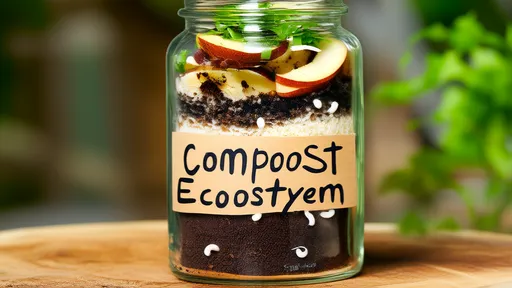
In urban kitchens worldwide, a quiet revolution is taking place inside transparent containers. These unassuming vessels, often placed on countertops or balconies, showcase the remarkable transformation of food scraps into nutrient-rich compost through a process that combines ancient decomposition principles with modern ecological awareness. The compost "ecosphere" concept turns waste management into a visible, educational, and almost meditative practice.
Biology

Radiation 'Converter': Fungi Turn Gamma Rays into Bioenergy"

By /Aug 7, 2025

In the shadow of nuclear disasters and radioactive wastelands, an unexpected organism has emerged as a potential game-changer in energy conversion. Scientists have discovered that certain species of fungi possess the remarkable ability to harness gamma radiation, transforming it into usable biological energy. This phenomenon, observed in fungi thriving in high-radiation environments like the Chernobyl Exclusion Zone, challenges our fundamental understanding of energy conversion in living organisms.
Biology

Mitochondrial Fountain of Youth": Small Molecule Activators Reboot Aging Cell Energy Factories

By /Aug 18, 2025

In a groundbreaking development that could rewrite the rules of aging, scientists have unveiled a novel class of small-molecule activators capable of rejuvenating mitochondria—the cellular powerhouses that deteriorate with age. This discovery, dubbed "mitochondrial rejuvenation therapy," represents a paradigm shift in our understanding of cellular aging and opens unprecedented avenues for combating age-related diseases.
Biology

High-Pressure Enzyme Magic": Deep-Sea Enzymes Catalyze Miracles at 1800 atm

By /Aug 7, 2025

In the crushing depths of the ocean, where sunlight dares not venture and pressures reach a staggering 1,800 atmospheres, life not only persists but thrives in ways that continue to astonish scientists. Among these deep-sea marvels are enzymes—biological catalysts that defy conventional understanding by functioning flawlessly under conditions that would obliterate most terrestrial proteins. These high-pressure "enzyme magicians" are rewriting the rules of biochemistry, offering tantalizing glimpses into both the origins of life and futuristic industrial applications.
Biology

Data Privacy Firewall": New Encryption Strategies for Genomic Databases

By /Aug 7, 2025

The rapid expansion of genomic databases has revolutionized biomedical research, but it has also introduced unprecedented privacy concerns. As scientists and corporations amass vast troves of genetic information, the need for robust encryption strategies has become a pressing priority. Recent breakthroughs in cryptographic techniques are now offering a potential solution: creating an impenetrable "firewall" around sensitive genomic data without compromising its utility for life-saving research.
Biology

DNA Music Encoding": Translating Base Sequences into Environmental Symphonies

By /Aug 7, 2025

In a groundbreaking fusion of science and art, researchers have developed a method to translate DNA sequences into complex musical compositions, creating what they call "environmental symphonies." This innovative approach, known as DNA "sonification," transforms the four nucleotide bases—adenine (A), thymine (T), cytosine (C), and guanine (G)—into musical notes, offering a new way to experience the hidden rhythms of life.
Biology

Vacuum Cryptobiosis": Chromosome Folding Shield in Tardigrade Dehydration

By /Aug 7, 2025

In the microscopic world, few creatures are as enigmatic and resilient as tardigrades, often dubbed "water bears" or "moss piglets." These tiny, eight-legged extremophiles have fascinated scientists for decades with their ability to survive conditions that would be lethal to most other forms of life. Among their many survival strategies, one of the most remarkable is their capacity to endure extreme dehydration—a process that triggers a mysterious biological phenomenon known as anhydrobiosis. Recent research has uncovered the secrets behind this ability, revealing a sophisticated "chromosomal folding shield" that protects their DNA during desiccation.
Biology

Circular RNA Shield: Molecular Mechanisms for Protecting Brain Cells Against Oxidative Damage

By /Aug 18, 2025

In a groundbreaking discovery that could reshape our understanding of neuroprotection, scientists have uncovered how circular RNA molecules form a remarkable biological shield against oxidative damage in brain cells. This molecular armor, composed of unique circular RNA structures, demonstrates an unprecedented capacity to neutralize reactive oxygen species (ROS) that typically ravage neuronal tissues during neurodegenerative processes.
Biology

Quantum Courier of Cell Membrane: Lipid Raft Channels Enable Millisecond Ion Transport

By /Aug 18, 2025

In a groundbreaking discovery that bridges quantum physics and cell biology, researchers have unveiled a startling new mechanism for ion transport across cell membranes. Dubbed the "quantum express" system, this finding reveals how lipid rafts create specialized channels capable of moving ions at unprecedented millisecond speeds - far faster than conventional models predicted.
Biology

Ethics Education Compulsory Course": Adding Science and Technology Ethics to Middle School Biology Curriculum

By /Aug 7, 2025

In a groundbreaking move to prepare students for the ethical challenges of modern science, Chinese secondary schools are integrating technology ethics into their biology curriculum. This initiative reflects growing global concerns about the societal impacts of rapid scientific advancement and aims to cultivate responsible future scientists and citizens.
Biology

Chromosome Topological Locks": A New Mechanism for Cohesin Proteins to Dynamically Maintain the 3D Structure of DNA

By /Aug 18, 2025

In a groundbreaking study that reshapes our understanding of genome architecture, researchers have uncovered how cohesin dynamically maintains the three-dimensional structure of DNA through a mechanism dubbed the "topological lock." This discovery provides unprecedented insights into how chromosomes organize themselves within the nucleus and how this organization influences crucial cellular processes such as gene regulation, DNA replication, and repair.
Biology

Arsenic-Based Lifeline": A Comprehensive Map of Microbial Arsenic-Phosphorus Metabolism

By /Aug 7, 2025

The discovery of microbes capable of substituting phosphorus with arsenic in their biomolecules has rewritten one of the fundamental tenets of biochemistry. For decades, phosphorus was considered an irreplaceable element for life—critical to DNA, RNA, and ATP. Yet, in the harsh, phosphorus-deprived environments like California's Mono Lake, scientists uncovered organisms that challenge this dogma. These extremophiles don't just tolerate arsenic; they incorporate it into their cellular machinery, suggesting a radical flexibility in life's chemical blueprint.
Biology

Protein Liquid Timers": Phase Separation Regulates Cell Cycle Synchronization

By /Aug 18, 2025

In the intricate dance of cellular division, timing is everything. Recent breakthroughs in molecular biology have unveiled a mesmerizing mechanism by which cells maintain their rhythmic precision—a phenomenon now referred to as the "protein liquid clock." This discovery centers on the role of phase separation in synchronizing the cell cycle, offering a fresh lens through which to view the choreography of life at its most fundamental level.
Biology

AI Prediction of CRISPR Off-Target Effects: The Traffic Lights" of Gene Editing

By /Aug 7, 2025

The advent of CRISPR-Cas9 gene editing has revolutionized biotechnology, offering unprecedented precision in modifying DNA sequences. However, the specter of off-target effects—unintended edits at sites other than the intended target—looms large over its clinical applications. Researchers are now turning to artificial intelligence (AI) to predict and mitigate these risks, creating what some call a "traffic light" system for CRISPR safety. This emerging synergy between AI and genomics could pave the way for safer therapeutic interventions.
Biology

Biological Weapon Defense Shield": Global Monitoring of Misuse of Genetic Technology

By /Aug 7, 2025

The specter of biological weapons has haunted humanity for decades, but recent advances in gene-editing technologies have amplified these fears to unprecedented levels. CRISPR-Cas9, synthetic biology, and other breakthroughs have democratized access to tools that could be repurposed for malicious intent. This dual-use dilemma has spurred global efforts to establish a "Defense Shield" against the misuse of genetic engineering—a coordinated system of surveillance, regulation, and response to mitigate existential threats.
Biology

Campus Insect Hotel": Monitoring Urban Biodiversity Project

By /Aug 7, 2025

In the heart of the urban jungle, where concrete often overshadows greenery, a quiet revolution is taking place on university campuses. The "Insect Hotel" initiative, a project designed to monitor urban biodiversity, is gaining traction as an innovative approach to understanding and preserving the delicate ecosystems that thrive within city limits. These tiny structures, often overlooked by passersby, serve as both shelters for insects and living laboratories for researchers and students alike.
Biology

Microscopy on a Budget: DIY $20 Device to Observe Pond Microorganisms

By /Aug 7, 2025

In an era where high-end microscopes remain prohibitively expensive for many citizen scientists and students, an ingenious low-cost solution has emerged from the maker community. The 20 Yuan DIY Smartphone Microscope Project is revolutionizing how we explore microscopic worlds, particularly the vibrant ecosystems hidden in pond water.